
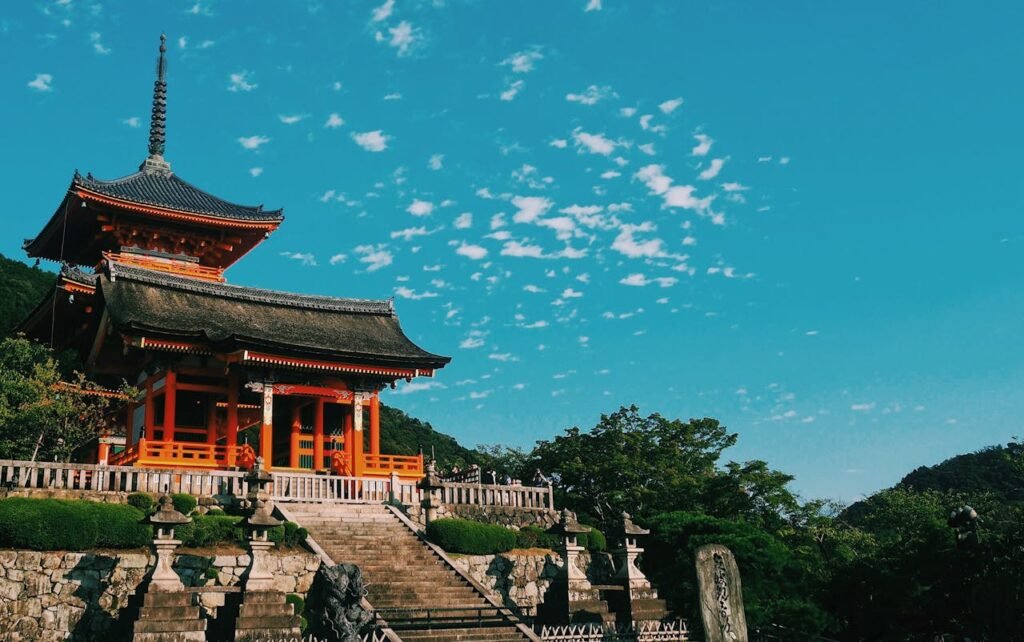
Kyoto is a city of quiet beauty — where ancient temples rise among maple trees, stone paths wind through bamboo forests, and the rhythm of life still feels deeply connected to tradition.
If you’ve ever dreamed of experiencing Kyoto like a local, not just a tourist, this guide is for you. I’ll share a few lesser‑known temples, peaceful tea houses, and simple cultural tips that will help you travel with respect, curiosity, and a little more ease.
Why Kyoto Feels Different
Kyoto isn’t just a city of sights; it’s a city of atmosphere.
You’ll feel it in the early morning mist over the Philosopher’s Path, in the soft rustle of bamboo in Arashiyama, and in the way people move through the city — calmly, quietly, with a sense of care.
For travelers, this means two things:
- The most memorable moments often happen off the main tourist trails.
- A little understanding of local customs makes your visit more meaningful and more welcome.
Hidden Temples in Kyoto (Beyond the Crowds)
Kyoto has over 1,600 temples, and most visitors see only a handful. Here are a few quieter spots that locals love, where you can enjoy peace, beauty, and a deeper sense of place.
1. Shōren‑in Monzeki (青蓮院門跡) – Higashiyama
Often overlooked for nearby Kiyomizu‑dera, Shōren‑in is a graceful temple tucked among tall trees near Yasaka Shrine.
- Why it’s special: Elegant architecture, a moss‑covered garden, and a calm atmosphere even in busy seasons.
- What to do: Walk slowly through the garden, admire the painted sliding doors, and if visiting in autumn, return at night for the beautiful illuminations.
- Local tip: Visit early in the morning or late afternoon to avoid the few tour groups that come here.
2. Hōnen‑in (法然院) – Near the Philosopher’s Path
A small, mossy temple hidden in the hills, Hōnen‑in feels like stepping into a painting.
- Why it’s special: A peaceful moss garden, a gentle stream, and a sense of stillness that’s hard to find in central Kyoto.
- What to do: Sit quietly, listen to the water, and walk the short path around the temple.
- Local tip: Combine this with a walk along the Philosopher’s Path, especially in spring (cherry blossoms) or autumn (maple leaves).
3. Gio‑ji (祇王寺) – Arashiyama
Just a 20‑minute walk from the famous bamboo grove, Gio‑ji is a tiny temple known for its lush moss garden.
- Why it’s special: A quiet, intimate space where moss covers almost everything, creating a soft, green world.
- What to do: Walk slowly, avoid stepping on the moss, and take a moment to just breathe.
- Local tip: Visit on a weekday morning to enjoy it almost to yourself.
4. Kōdai‑ji Entokuin (高台寺 圓徳院) – Higashiyama
A small sub‑temple of Kōdai‑ji, Entokuin is much quieter than its famous neighbor.
- Why it’s special: Elegant screen paintings, a minimalist Zen garden, and a calm atmosphere just minutes from busy streets.
- What to do: Admire the art and garden, and if time allows, visit the main Kōdai‑ji temple for its beautiful night illuminations in spring and autumn.
- Local tip: Buy a combined ticket if visiting both Kōdai‑ji and Entokuin — it’s a small saving, but it adds up.
5. Daikaku‑ji (大覚寺) – Saga‑Arashiyama
Once an imperial villa, Daikaku‑ji is a large temple centered around a beautiful pond, perfect for a relaxing walk.
- Why it’s special: Despite its size and beauty, it’s rarely crowded, making it ideal for enjoying nature and traditional architecture in peace.
- What to do: Walk around Osawa Pond, admire the autumn leaves, and enjoy the quiet atmosphere.
- Local tip: Visit in autumn for the best colors, but even in other seasons, the pond and surrounding trees are lovely.
Tea Houses & Matcha Experiences
Drinking tea in Kyoto isn’t just about taste; it’s about slowing down and appreciating the moment. Here are a few gentle ways to experience tea like a local.
1. A Simple Matcha at a Traditional Tea House
You don’t need a formal tea ceremony to enjoy Kyoto’s tea culture. Many small tea houses offer matcha and a sweet in a peaceful setting.
- Where to try:
- A small tea house in the Gion or Higashiyama area.
- A quiet café near a temple or garden.
- What to expect:
- A bowl of thick, vibrant matcha.
- A small traditional sweet (wagashi) to balance the bitterness.
- A calm, unhurried atmosphere.
- Local tip: Sit on the tatami if possible, and take your time. This is a moment to pause, not rush.
2. A Gentle Introduction to Tea Ceremony
If you’d like a more structured experience, a short tea ceremony is a beautiful way to learn about Japanese hospitality (omotenashi).
- What to expect:
- A small group, often in a traditional tea room.
- A host who guides you through the steps: how to sit, how to receive the bowl, how to drink.
- A focus on mindfulness, respect, and quiet appreciation.
- Local tip:
- Look for beginner‑friendly sessions (often 45–60 minutes).
- Wear comfortable clothes and be ready to sit on the floor (kneeling or cross‑legged).
- Don’t worry about “doing it perfectly” — the host will guide you gently.
3. Matcha at a Local Café (Not Just for Tourists)
Kyoto has many cafés where locals enjoy matcha, not just tourists. These are great for a relaxed break.
- Where to try:
- A small café near Nishiki Market or in the Pontocho alley area.
- A quiet spot near a university or residential neighborhood.
- What to order:
- Matcha latte (hot or iced).
- Matcha parfait (matcha ice cream with fruit and mochi).
- A simple matcha with a small cake or cookie.
- Local tip:
- Avoid the busiest tourist cafés if you want a quieter experience.
- Try a seasonal special (cherry blossom matcha in spring, chestnut matcha in autumn).
Cultural Etiquette: Simple Tips for Respectful Travel
Kyoto is a city that values harmony, quiet, and respect. A few small habits can make your visit more comfortable and more welcome.
1. Quietness and Slowness
- Temples and gardens: Speak softly, avoid loud conversations, and move slowly.
- Public transport: Keep your voice low, especially on buses and trains.
- Walking: Avoid rushing or pushing through crowds; it’s kinder to move with the flow.
2. Removing Shoes
- When:
- Entering temples, shrines, and traditional inns (ryokan).
- Some restaurants and tea houses (look for a step up or a shoe rack).
- How:
- Take off your shoes at the entrance.
- Place them neatly, facing the door.
- Wear socks (many places don’t allow bare feet).
3. Bowing and Greetings
- A small bow is a common way to say “thank you” or “excuse me.”
- Simple phrases:
- “Arigatō gozaimasu” (Thank you).
- “Sumimasen” (Excuse me / Sorry).
- “Onegaishimasu” (Please / I’d like…).
- Local tip: A smile and a small bow go a long way, even if your Japanese is basic.
4. Photography with Care
- Temples and shrines:
- Ask before photographing people, especially monks or priests.
- Avoid flash in dimly lit halls.
- Gardens and quiet spaces:
- Take photos, but don’t block paths or stay too long in one spot.
- Avoid loud selfie sticks or group photos that disturb others.
5. Tipping and Service
- Tipping is not expected in Japan.
- Instead:
- Say “arigatō gozaimasu” when leaving a shop or restaurant.
- Place money on the tray (not directly in the cashier’s hand) when paying.
- Leave things tidy (chairs pushed in, trash in bins).
6. Eating and Drinking
- Chopsticks:
- Don’t stick them upright in rice (this resembles a funeral ritual).
- Use the chopstick rest if there is one.
- Slurping:
- It’s normal (and often polite) to slurp noodles like ramen or soba.
- Drinking:
- Pour drinks for others before yourself.
- Hold your glass with both hands when receiving a drink.
A Gentle 3‑Day Local‑Style Itinerary (Optional)
If you’d like a simple framework, here’s a relaxed 3‑day plan that balances sightseeing with quiet moments:
Day 1: Higashiyama & Gion
- Morning: Kiyomizu‑dera (early) → Shōren‑in Monzeki → Kōdai‑ji Entokuin.
- Afternoon: Walk through Sannenzaka and Ninenzaka → Gion (quiet streets, not just the main tourist area).
- Evening: Simple dinner at a local restaurant → a quiet matcha at a small tea house.
Day 2: Arashiyama & the Philosopher’s Path
- Morning: Bamboo grove → Gio‑ji → Adashino Nenbutsu‑ji.
- Afternoon: Daikaku‑ji → a short walk along the river.
- Evening: Philosopher’s Path (if time) → a simple meal in a local café.
Day 3: A Day of Quiet
- Morning: Hōnen‑in → a slow walk in the surrounding hills.
- Afternoon: A short tea ceremony or a long matcha at a quiet café.
- Evening: A simple dinner and a quiet moment reflecting on the trip.
Final Thoughts: Travel with Curiosity, Not Just a Checklist
Kyoto rewards slowness. The most beautiful moments often come when you’re not rushing from one temple to the next, but when you’re sitting quietly with a bowl of matcha, walking a mossy path, or simply watching the light change on an old wooden gate.
Travel with curiosity, not just a checklist.
Ask gently, move quietly, and let the city show you its quieter, deeper side.